Part 3 of the Train Smarter Series — Practical winter strength strategies for power, recovery, and long-term performance.
When it’s cold and dark outside, many endurance athletes just try to hold on until spring. But winter doesn’t have to be a lost season where you simply log base miles.
“Winter is a wonderful opportunity to embrace the off-season,” says Molly Schmelzle, a certified strength and conditioning coach and personal trainer who works with runners and cyclists. “It’s a chance to step away from highly structured, sport-specific training and build the kind of strength that supports the body’s integrity, including connective tissue and joint control.”
In Part 1 of our Train Smarter Series, coach Josh Friedman shared how to build a strong aerobic base and stay motivated during the winter. Part 2 covers essential fueling with practical winter nutrition strategies from a registered dietitian. In Part 3, we focus on strength.
This series helps explain how our training, nutrition, and gear decisions serve as long-term adaptations rather than quick fixes.
Let’s dive into how to get stronger, protect against injuries, and recover adequately to prepare for the spring transition.
We may earn a commission through our affiliate links at no extra cost to you.
Why Winter Is the Best Time for Strength Training
When outdoor workouts aren’t possible (or appealing), winter is a great time to turn your attention indoors. Without the pressure of racing, athletes can focus on improving movement quality, consistency, and addressing weaknesses.
“Most of us aren’t professional athletes,” Molly explains. “We’re time-crunched. Winter also gives people permission to slow things down and train with intention.”
Beyond improving performance, she adds, regular strength training can promote longevity. “It supports bone health, tendon and ligament strength, balance, and movement efficiency. Those qualities matter whether you’re training for a race or just want to keep moving well as you age.”
Building Power Without Burning Out

Power isn’t limited to sprinting. It’s essential for climbing hills, surging, accelerating, and staying strong when fatigue builds.
The key is introducing power in a smart way after steady base training.
“If your training relaunch is close to the basement, start conservatively,” says Molly. “Power training can be intense on the body. Small doses go a long way.”
For runners, she suggests short hill strides layered into easy runs. These brief efforts reintroduce intensity while keeping overall impact lower than flat sprinting. Over time, stride duration can gradually increase as tissues adapt.
And for cyclists, climbing is a great way to build power and endurance. “Hills are your friend early on,” she explains. “They build strength and cardiovascular efficiency while naturally limiting speed.”
If bad weather is forcing you indoors, consider an indoor bike trainer with hill simulation to prepare for outdoor climbs.
Although hills are encouraged in the base season and throughout most training blocks because of their challenging yet forgiving nature, Molly emphasizes that maximal sprinting efforts can wait until a sufficient level of power and impact training have been reintegrated. “Sprinting demands full recovery,” she says. “There’s no rush to get there.”
Reintroducing Impact Without Inviting Injury

Endurance training improves fitness, but not necessarily durability. High volumes of repetitive movement (such as distance running) can wear down tissue over time, especially when strength work dwindles during race season.
Impact often gets blamed for injuries, but a balanced amount helps maintain bone density and improve joint stability. Issues can appear when impact is added too quickly or without adequate preparation.
Including low-level plyometric and isometric work in strength sessions can help prepare your body. “Think of it as controlled exposure,” says Molly. “You’re teaching tissues how to tolerate load again.”
Lower-intensity hopping and jumping drills help rebuild elasticity and coordination without overwhelming the system. Save the more aggressive plyometric work until strength, movement quality, and recovery capacity are well established.
A simple way to build bodyweight strength is with yielding (or holding) isometrics. It’s when you maintain a joint position under submaximal load for time. Think of a classic wall sit or a plank hold.
Benefits of basic yielding isometrics include improved neuromuscular efficiency, tendon stiffness, foundational strength, and reduced muscular and joint imbalances.
If running feels too intense, you can also try other activities to build power. Cycling, rowing, swimming, and skiing can keep your mind and muscles engaged with less impact. “All these activities count,” Molly reminds athletes. “You don’t have to do everything on your feet.”
Strength Moves That Matter Most for Endurance Athletes
Rather than picking random exercises, Molly suggests mastering a few basic foundational movements.
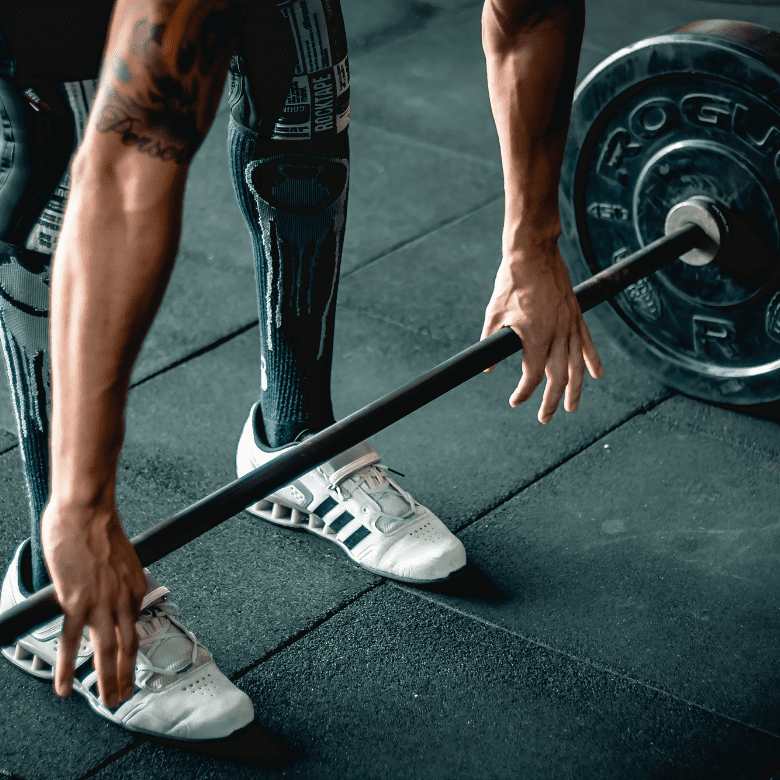
“Hinging is one of the most important patterns to learn,” she says. “It strengthens the posterior chain and stabilizes the back and pelvis, which transfers to better performance and injury prevention.”
Single-leg and split-stance work is equally important. “Running is a single-leg sport,” she explains. “Cyclists benefit too. Isolating each side helps correct imbalances and improve coordination.” You can incorporate unilateral movements in your workouts with these adjustable dumbbells for your home gym or use kettlebells to work on core stability and overall strength.
Core work also matters, but in ways you might not expect. “It’s less about reps and more about stability control, breathing, and anchoring,” she says. “Those qualities show up when you’re tired.” A common saying or cue in the strength world, she reminds athletes, is that proximal stability leads to better distal mobility.
The common thread across all strength work is quality over intensity. “You don’t need maximal loads to see benefits,” she notes. “Consistency matters more.”
When (and How) to Lift Heavier During Winter Strength Training

If you’ve been training just to maintain strength year-round, winter can be an ideal time to try lifting heavier. Adding more weight “strengthens tendons, ligaments, and connective tissue in ways lighter training doesn’t,” Molly says. “If your body has integrity, the heavier lifting can support movement economy and long-term durability.”
But don’t rush the heavy lifting. If you’ve taken time off, start by rebuilding movement patterns and tissue tolerance before increasing load. Start by picking a weight you can lift comfortably 12-15 times.
When you’re ready, progressing toward approximately 80–90% of your maximum can help improve strength, increase time to exhaustion, and protect against common running and cycling injuries.
As you get stronger, it’s also important to give your body enough time to rest and recover. “Like endurance training, strength gains depend on recovery,” Molly explains. “You have to give the body time to adapt. Respecting muscle preparedness for strength gains is key.”
If you’re not sure how and when to lift heavy, and when to back off, it may be time to consult a professional. “I always recommend working with a trainer to learn technique, movement patterns, and training principles,” Molly emphasizes.
She also recommends this TrainingPeaks article for endurance athletes who want to safely resistance train and perform well in their chosen sport.
Why Strong Feet, Ankles, and Hips Matter
Weak links, such as the feet, ankles, and hips, can create lower back and knee problems. When pain appears during training, it may be far from the source of the issue. The culprit could be limited strength or mobility, especially in the lower body.
“Feet are the foundation,” Molly explains. “If the foundation is weak, everything up the chain pays for it.” For stronger feet, she recommends walking barefoot, doing toe yoga, and rolling the underside of the feet with a Neuro ball or similar stimulus tool. When possible, barefoot lifting also strengthens the feet.
Runners and cyclists can also benefit from calf-specific exercises. Molly recommends double and single leg calf raises at various tempos to work feet and ankles. Seated raises will activate the soleus muscle, she explains, and standing will target the more superficial gastrocnemius muscle.
“Real strength happens while loading the tissue with weight,” she says. “Properly performing heel raises and isometric holds aligns fascial lines, muscle fibers, and joints from the big toe up the fascial and kinetic chain.”
If tight hips are an issue, maintaining a good range of motion can promote smoother mechanics and reduce compensatory strain with repetitive movements. Exercises such as a frog pose with active holds and a seated 90-90 with windshield wiper leg action help keep joints within their strong active range.
How Mobility Supports Stronger, More Efficient Movement

Mobility work can boost performance by allowing joints to move through their full range of motion. This keeps muscles engaged and can help you get deeper into squats or lunges to build power and speed.
Plus, it doesn’t have to be complex or time-consuming. “The best routine is the one you’ll actually do,” Molly says. “It’s going to look different for every athlete.”
Rather than chase extreme flexibility, she encourages athletes to focus on maintaining active control through available range of motion, especially as they age. “I am an advocate for movement exploration and intuitively feeling what the body needs pre- and post-workout,” she explains. “Having a passive range of motion close to an active joint range of motion is an injury prevention measure.”
Not sure where to begin? Molly suggests a joint-by-joint approach. You can use tools like foam rollers, balls, a set of resistance bands, and other fitness tools.
“If it resonates and there is a benefit felt, use it,” she suggests. “Adding in isometrics and/or positional holds is another fantastic way to activate the muscles, reset the body, and create biomechanical integrity.”
Scale Recovery with Training

As training demands increase, recovery must scale with them. Think of recovery as part of the training process, rather than something you squeeze in when time allows.
“Training is a recovery-led process,” Molly emphasizes. “Gains are made when the body isn’t continually under stress.” She points to a well-known concept from author Brad Stulberg’s Growth Equation: stress plus rest equals growth.
She encourages athletes to establish a post-workout recovery routine and adjust it based on session intensity and duration. Recovery should also happen during workouts. “Remember to recover between intervals,” she says. “And take a full day off every microcycle — roughly every 7 to 10 days.”
If you find it hard to completely rest, some low-level movement is OK. “Short hikes or technique-driven swims count as recovery,” Molly explains. “Low effort, low heart rate, minimal duration.”
After major training blocks, however, she recommends stepping away entirely.
“Take a couple of days completely off and let the body soak in the hard training work,” she says. “It’s okay to step away for a day or two.”
What you eat can also play a role in your recovery. To recover faster, you can also try a scoop of whey protein powder for speedy post-workout repair.
One Clear Takeaway
If there’s one piece of advice that should stick with endurance athletes this winter, Molly explains, it’s this:
Take recovery seriously.
Don’t resist resistance training.
“Training is a recovery-led process,” Molly says. “Both recovery and strength work build capacity, which is what keeps athletes healthy and performing well over the long-term.”
Meet Our Contributor
Molly Schmelzle, owner and head coach of Running Rabbit Endurance (RRE), blends science-driven training with a passion for lifelong fitness. With a background in elite team sports and endurance athletics, plus certifications in strength and conditioning, personal training, and health coaching, she helps athletes build strength, resilience, and performance far beyond race day.
💬 Have a question or want to connect?
Molly welcomes athletes who want to learn more or explore coaching support.
- molly@runningrabbitendurance.com
- mcschmel@yahoo.com
🎥 YouTube
About the Train Smarter Series
The Train Smarter Series brings together coaches, dietitians, and training professionals to share practical, evidence-backed strategies to help you live better and become a stronger, healthier athlete.
Stay Connected
Subscribe to the Fit Lifestyle Reviews newsletter for expert-backed training, nutrition, and gear insights — straight to your inbox.
Coming next: Transitioning from winter training to spring — how to add intensity without losing durability.